

As marketers exclusively focused on senior living, we are adept at describing the thoughtful design, gorgeous interiors and interesting location of each of our client partners. Layer onto that the details of rich programming, hospitable service offerings and helpful amenities, and you have a beautiful picture of a thriving retirement community. Or do you? Without experiences and perspectives of the seniors living in those spaces and taking advantage of that programming, content, such as blogs, eNewsletter articles, social media posts and public relations efforts, tends to fall flat. Real flat.
Tapping into those resident experiences and POVs is key to creating authentic content that resonates. But then what? You have a bank of interesting resident — and staff! — stories, but what do you do with them? And should you abandon your features-focused content? What about incentives and community news like new hires, expansions and renovations? How do all of these important bits of content fit into a strong strategic approach to marketing your community?
So many questions for savvy marketers. The answer? Content strategy that cooks!
What Is Content Strategy?
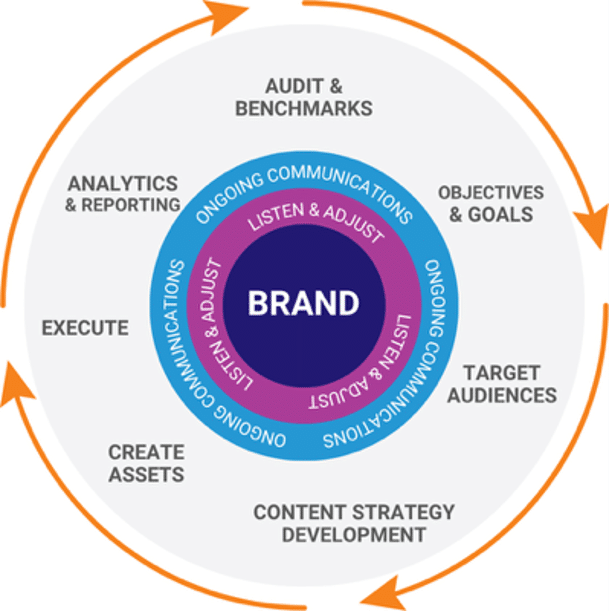
Content strategy in marketing is about delivering the right message to the right audience at the right time. And it’s not a one-and-done effort. It’s an ongoing process of analyzing data, refining messaging, developing content, optimizing for the platform and reviewing performance.
Content strategy development is not always linear, but our approach does integrate a sense of order and purpose. Because by understanding your audience, establishing your goals and defining your brand’s unique selling points, we are able to strategically develop content that connects and converts.
How Do You Create a Content Strategy Plan?
Content strategy is equal parts art and science. It starts with a firm understanding of your brand, who you are trying to connect with, and a willingness to listen and adjust. It involves reflection, planning, curiosity, creativity and a dash of creative adaptability.
Think of your content strategy like developing a meal plan.
You look at ingredients, take stock of what you already have in your refrigerator and pantry, and make a list. Maybe you consider what fruits and vegetables are in season, what meal you and your family really loved (or didn’t). You consider what tools and skills you have in the kitchen, and who you need to feed this week.
With these factors in mind, you can then craft a meal plan, content strategy plan that connects with your audience, delivers on your goals and uses your resources wisely.
So what does that look like from a practical standpoint?
- Know Who You Are Feeding
- Define and understand who you are inviting to dinner. This is another way of saying, know your target audience. Details like demographics, motivations and habits give insight into what type of content will resonate with your market, and what you should spend your time “cooking up.”
- Take Stock of Your Pantry
- Know what creative assets you have on hand already. Just as a can of soup can be the foundation for a number of different meals, you likely have content staples sitting in your pantry waiting to be used. For instance, maybe you have some really good blogs from a couple of years ago that are still highly relevant. Maybe you created a piece of gated content, like a handy retirement guide, that can now be used in a different way. Be open to reusing and remixing. Quality content that authentically represents your brand has a long shelf-life.
- Consider What Is in Season
- Be strategic about your timing and when you put certain messages out into the market. When planning, take into consideration seasonality. Like turkey on Thanksgiving or tomatoes in the summer, there are just some foods people expect at certain times of the year. Likewise, some senior living content makes more sense during certain seasons. [Read more here: The Seasonality of Social]
- Understand What People Loved (or Didn’t)
- A successful content strategy involves ongoing listening and adjusting. This can be done through quantitative methods such as reporting and analysis of engagement metrics, and it can mean seeking qualitative feedback through focus groups, surveys or even reading online comments. Be open to asking and answering questions and listening well. Build a culture of curiosity, because a solid content strategy is not built on flash-in-the-pan ideas.
- Be Honest About Your Tools and Skills
- Is this a meal that requires an oven or an air fryer? Before you dive into creation and execution of content, take a step back and evaluate if you have the right tools available. Do you have the right team members and experts in place to pull off a well-rounded plan? Do you have the budget to support it? Level-set expectations so you don’t get burned-out (or burned). And, of course, feel free to reach out to our team of Audience Insights & Content Strategy specialists if you want to discuss how Angell Marketing might support your efforts.
What Values Support a Content Strategy Ecosystem?
Content strategy is about playing the long game. A reactionary, one-off approach, throwing content out and seeing what sticks, will result in disconnect, within your marketing team, but also between the brand and your intended audience.
At Angell Marketing, we refer to this framework as a content strategy ecosystem. All content that enters the market — blogs, organic social posts, eNewsletters or videos on your website — works together to support your brand’s goals.
Value: Brand Quality
The foundation of a healthy, successful content ecosystem is a deep understanding of your brand in order to deliver content that will resonate with your intended audience. Without a clear understanding of who you are and who you are trying to reach, how can we expect to build a solid strategy?
As marketers, we ask questions, dig into data, uncover patterns and seek to understand the “why” behind them. This is the intersection of research and human connection, and it will go on to impact all elements of content strategy development.
Value: Brand Consistency
The next aspect of a sound content strategy ecosystem is delivering on the brand promise and connecting with your audience. Any content strategy will fall flat if we cannot deliver high-quality content with consistency. Brand consistency is about maintaining brand standards and establishing authority in the market, but also about building trust with your audience.
As with maintaining a level of quality, consistency of content distribution affects your audience’s understanding and perception of your brand.
What’s Your Plan for Content Creation?
Creating content to reach audiences at the right time with the right message flows from a commitment to quality and consistency. Before we dive into content distribution through specific channels and tactics, we establish a content creation plan. Here is where we review our strategy to leverage themes and insights found during discovery, find content gaps, and look for opportunities to reformat, repurpose and expand. We move away from large audience segments and start to think more granularly.
For example: During focus groups conducted at a community in Florida, the lush grounds and well-maintained landscaping of the community kept coming up as a key feature residents and prospects appreciated about the community. Using this insight, we added “grounds that delight and inspire” to our community positioning and messaging and started mapping out blog ideas — A Guide to Gold Coast Native Plants, How Your Surroundings Impact How You Feel, Year-Round Benefits to Living in Florida — which allowed us to expand on these themes.
Once we map out what we want your audience to understand, learn and know about your brand, then we can make content distribution decisions, keeping in mind the commitment to quality and consistency.
Intent To Distribute, Content That Is
Brand consistency and content creation impact content distribution (aka the how and when we deliver content to your audience). This is where we start to personalize and strategize around specific distribution channels, factoring in elements we can control — such as copy, images, layout, posting time — and those we have less direct control over, but can account for to the best of our ability — such as algorithms, mobile and desktop usage, email delivery system.
Practically, this looks like developing content that is relevant, timely, interesting and educational for your audience while ensuring we are following best practices. We consider where someone might be in their decision-making journey, and create multiple opportunities for them to connect with your brand. These touchpoints ladder up to brand consistency and brand quality.
Scale Away, Scale Away, OK You Get It
Content strategy is about playing the long game, so an important step in content development is scaling what we’ve created. In our work as content strategists, we review the performance of content across platforms and then leverage what is resonating with your audience. This includes repurposing content from one platform for another to optimize impact and extend the lifecycle/reach as well as expanding on top-performing content. That could look like adding additional information to a blog that is performing well and reposting it, changing up photography on a web page to capitalize on a recent photo shoot, or simply telling a story from a different angle. For instance, perhaps you posted a blog that tells the story of a resident who is super involved in the activities offered at your community. Maybe revisit the blog and give the perspective of the activities team: how do they come up with their ideas, what resources do they rely on, what activities do they know will be a hit with residents?
Scaling content is about listening to your audience. We learn what is (and isn’t) connecting with them and pivoting accordingly so we can continue delivering quality content and elevating the brand.
Like a beautifully orchestrated meal, the value of a content strategy ecosystem is more than the sum of its parts. An effective system — where pieces are working together deliciously — should lead to elevated brand authority and expanded reach over time. Your audience should come away from each encounter with your content fulfilled and perhaps even wanting more.
Don’t hesitate to contact us if you’re hungry for more information on effective strategies to create your own content ecosystem!
Featured Image: Prostock-studio / Shutterstock